



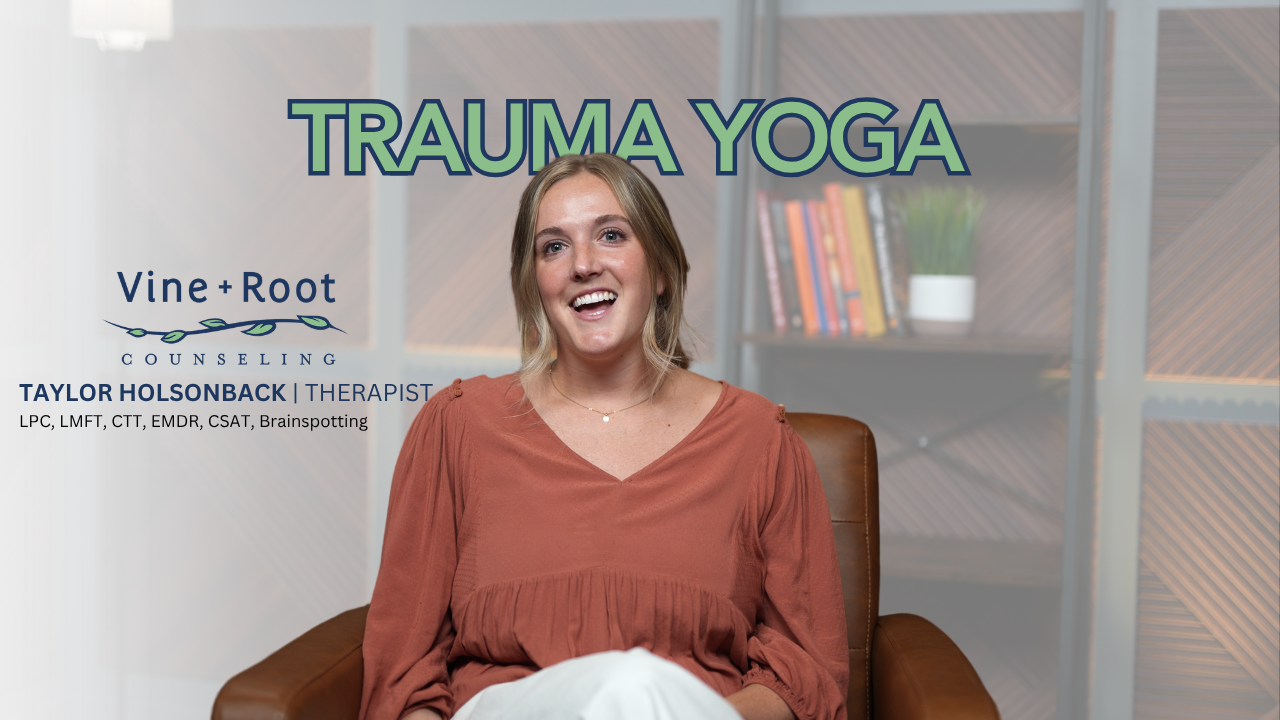
What Trauma Informed Yoga Really Is (And Why It’s Different)
When people hear the word yoga, they often picture flexibility, performance, mastering the perfect pose. Trauma informed yoga is something else entirely.
Trauma doesn’t just live in our thoughts. It settles into our nervous system and changes our relationship with our own body. Many people who have experienced trauma spend years feeling disconnected from themselves, whether that means ignoring physical cues, staying stuck in survival mode, or living in a near constant state of fight or flight.
Trauma informed yoga is designed to help reconnect the mind and body. Instead of focusing on getting a pose right, the focus shifts to awareness. What sensations are showing up? What is happening on the inside? It’s less about performance and more about presence.
One of my favorite quotes comes from yoga teacher Bernie Clark: yoga is not about using the body to get into the pose, it’s about using the pose to get into the body.
How It Works Alongside Therapy
Traditional therapy spends a lot of time helping people understand their stories and process emotions. Trauma informed yoga complements that work rather than replacing it. It gives people a way to notice physical sensations directly, practice regulation skills, and build a deeper sense of safety and control within their own bodies.
Healing happens in both the mind and the body. When we learn to listen to our bodies with curiosity instead of judgment, that shift becomes a powerful part of the healing process.
What the Research Shows
The benefits of trauma informed yoga aren’t just anecdotal. Psychiatrist Bessel van der Kolk, a leading researcher in the field of trauma, led a randomized controlled trial of 64 women living with chronic, treatment-resistant PTSD. The women were randomly assigned to either trauma informed yoga or supportive women’s health education, and by the end of the study, 52 percent of the yoga group no longer met the criteria for PTSD, compared with 21 percent in the education group.
Other studies point in the same direction. Research has found that trauma informed yoga can ease symptoms of PTSD, depression and anxiety. A broader review of existing research also found that the sense of safety created in a trauma informed yoga class was one of the strongest factors in helping people heal.
Benefits of Trauma Informed Yoga
- Reduced symptoms of PTSD
- Decreased anxiety
- Reduced depression
- Decreased dissociation
- Improved sleep quality
- Greater body awareness
- Improved ability to tolerate difficult sensations
- Stronger emotional resiliency
A Beneficial Part of the Healing Journey
Vine + Root Counseling offers private trauma yoga sessions, available individually or paired with our therapy services. Whether you’re new to yoga or have practiced for years, trauma informed yoga meets you where you are and helps you reconnect with your body at your own pace.
If you’re ready to explore how trauma informed yoga can support your healing, reach out to Vine + Root today.
Sources:
van der Kolk, B., et al. “Yoga as an adjunctive treatment for posttraumatic stress disorder: a randomized controlled trial.” PubMed. https://pubmed.ncbi.nlm.nih.gov/25004196/
“The efficacy of trauma-informed yoga in treating post-traumatic stress disorder symptoms in trauma-exposed adults: a protocol for a systematic review and meta-analysis.” PMC. https://pmc.ncbi.nlm.nih.gov/articles/PMC12853431/
“A Rapid Review Exploring the Role of Yoga in Healing Psychological Trauma.” PMC.https://pmc.ncbi.nlm.nih.gov/articles/PMC9741324/
